 THE SUPREME CITIZENS CHARTER
1
A New Perspective on DEI
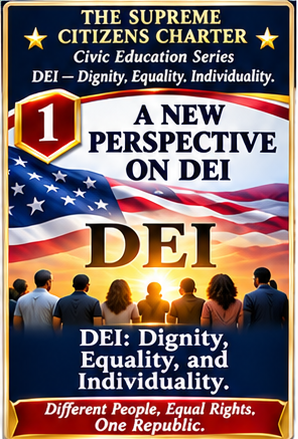
Dignity, Equality, and Individuality: a civic framework for equal citizenship.
Different People. Equal Rights. One Republic.
A civic interpretation of DEI rooted in human dignity, constitutional equality, independent thought, and responsible participation.
Explore all 12 panelsRead the declarationRespect the inherent worth of every person, including those with whom we disagree.
Protect each person's rights under the law and oppose unlawful discrimination.
Recognize each person's freedom, character, qualifications, and responsibility.
This is a proposed Supreme Citizens civic interpretation. The established meaning of DEI is Diversity, Equity, and Inclusion. The Citizens Branch is a proposed civic participation framework, not a fourth constitutional branch.
Explore the relationship between individual rights, fair opportunity, constitutional institutions, and the responsibility of We the People.
Select any panel to enlarge it. Use Previous / Next or your arrow keys to continue through the series.
Dignity, Equality, and Individuality: a civic framework for equal citizenship.
Human worth is not determined by identity or status.
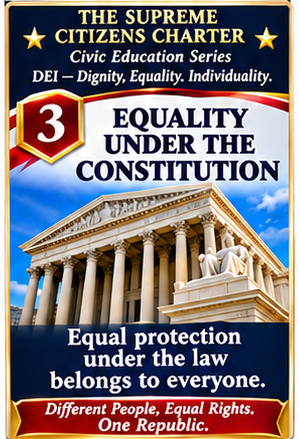
Equal protection under the law belongs to everyone.
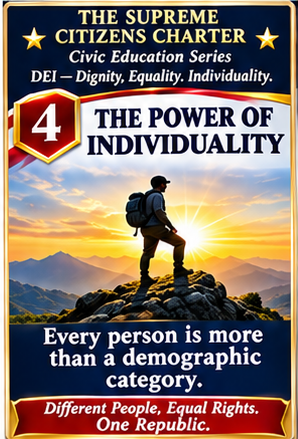
Every person is more than a demographic category.
Differences need not undermine national unity.
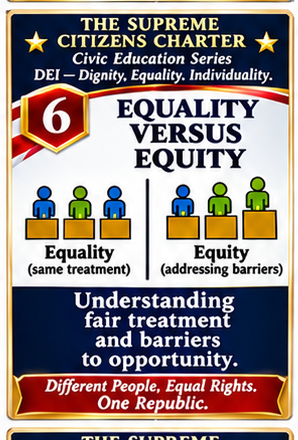
Equality emphasizes equal treatment; equity examines barriers to opportunity.
Qualifications, character, and conduct matter.
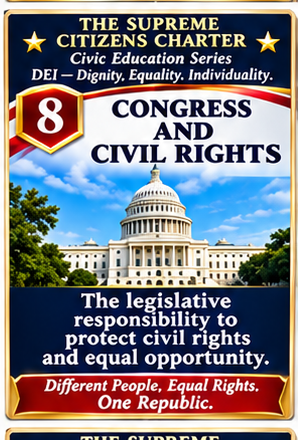
Congress legislates and oversees federal civil rights protections.
The President must faithfully execute federal law and remain accountable.
Courts adjudicate constitutional and statutory rights.
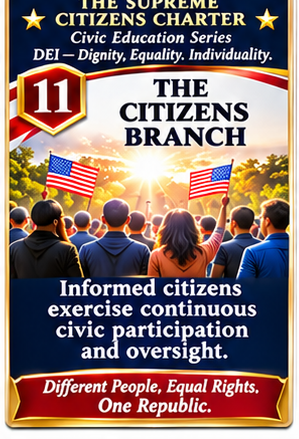
Informed citizens exercise ongoing civic participation and oversight.
Different People. Equal Rights. One Republic.
Select a poster to view the complete illustration, navigate the series, or share an individual panel.
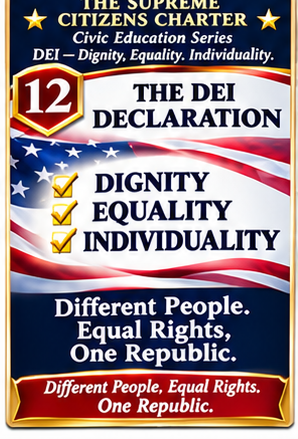
We stand for Dignity. We defend Equality. We celebrate Individuality.
Different People. Equal Rights. One Republic.
We affirm that every person possesses inherent worth, that government must respect constitutional and statutory rights, and that each individual deserves to be considered without unlawful discrimination or stereotypes.
Congress legislates, the President executes federal law, and the courts resolve cases and controversies. Citizens participate, question, petition, vote, and hold public officials accountable.