Constitutional Citizenship • Civic Participation

The Supreme Citizens Branch

A civic idea recognizing that We the People are not merely an audience to constitutional government. Citizens have a continuing role in learning, participating, questioning, serving, and preserving the Republic.

The central idea

We the People Are Not an Audience

The Supreme Citizens Branch is a civic and educational idea within the Supreme Citizens Charter. It is intended to help Americans understand the importance of citizenship and the continuing role citizens play in representative constitutional government.

The Citizens Branch is not a fourth branch of the United States government. The Constitution establishes the Legislative, Executive, and Judicial branches of the federal government.

The term Citizens Branch instead describes the civic participation of the people who learn about government, choose representatives through elections, exercise constitutional freedoms, communicate with public officials, peacefully advocate for change, serve their communities, and hold public institutions accountable through lawful constitutional processes.

Supreme Citizenship

I Have a Role in This Republic

The Supreme Citizens Branch encourages a change in civic perspective: from viewing government only as something happening around us to recognizing that citizens themselves have an important constitutional role.

That role does not place citizens above the Constitution or above one another. It recognizes the equal civic dignity of citizenship and the responsibility of each generation to participate within constitutional institutions and processes.

Five civic roles

The Citizen's Continuing Role

Citizen as Source

The civic philosophy begins with We the People. Constitutional government depends upon a political community of citizens who sustain representative institutions from one generation to the next.

Citizen as Selector

Citizens participate in choosing representatives through elections. Voting is therefore more than the expression of an opinion. It is one of the principal ways eligible citizens participate in determining who temporarily exercises public authority.

Citizen as Watchkeeper

Citizenship continues after Election Day. Citizens may remain engaged by following public affairs, communicating with representatives, petitioning government, participating in civic organizations, peacefully assembling, asking questions, and examining governmental decisions.

Citizen as Defender of Rights

Constitutional citizenship includes recognizing that fellow citizens retain their constitutional rights even when profound political disagreement exists. Political disagreement does not terminate citizenship.

Citizen as Steward

Every generation temporarily inherits the institutions of the Republic. Citizens therefore have an interest in learning about those institutions, improving them through constitutional means, and preserving functioning democratic government for future generations.
The civic cycle

Citizenship Is a Cycle, Not an Event

Before an Election

Learn. Register when eligible. Evaluate. Question. Discuss.

During an Election

Vote when eligible. Serve when appropriate. Observe. Participate.

After an Election

Monitor. Communicate. Petition. Question. Participate. Use lawful constitutional mechanisms to seek accountability and change.

Between Generations

Teach. Protect. Improve. Preserve.

Constitutional structure

Citizenship and the Three Branches

The Supreme Citizens Branch should not be confused with the constitutional branches of the federal government.

Congress exercises legislative authority granted by the Constitution. The President heads the Executive Branch. The federal Judiciary exercises judicial authority within the constitutional system.

The Citizens Branch exercises no separate governmental authority. Instead, it is a civic framework for understanding how citizens participate in and sustain representative constitutional government.

Citizen first

Political Opponents Remain Fellow Citizens

The Supreme Citizens Branch does not instruct citizens which political party, candidate, ideology, or policy position they should support. Citizens are expected to reach political conclusions according to their own judgment and conscience.

Americans may disagree strongly about government while sharing the same constitutional citizenship. Respect for the constitutional rights of people with whom we disagree is therefore an important part of Supreme Citizenship.

The 12 Principles

Putting Supreme Citizenship Into Practice

The Supreme Citizens Branch connects civic identity to the 12 Principles of the Supreme Citizen:

Learn • Vote • Choose • Speak • Petition • Assemble • Question • Serve • Respect Rights • Hold Accountable • Preserve Peaceful Succession • Preserve the Republic

Together, these principles describe citizenship as an ongoing civic responsibility rather than an activity limited to Election Day.

Explore the 12 Principles →

Our shared civic commitment

Our Role • Our Voice • Our Responsibility • Our Republic

Supreme Citizenship is based on a simple proposition: constitutional government requires both functioning institutions and citizens willing to understand and sustain them.

We are all Supreme Citizens — not because any one of us stands above another, but because citizenship carries equal civic dignity and shared responsibility.

Three Pathways of Participation

Citizens shape constitutional
government

These visual guides connect civic participation to the executive, legislative, and judicial branches. Each section includes official references for further reading.

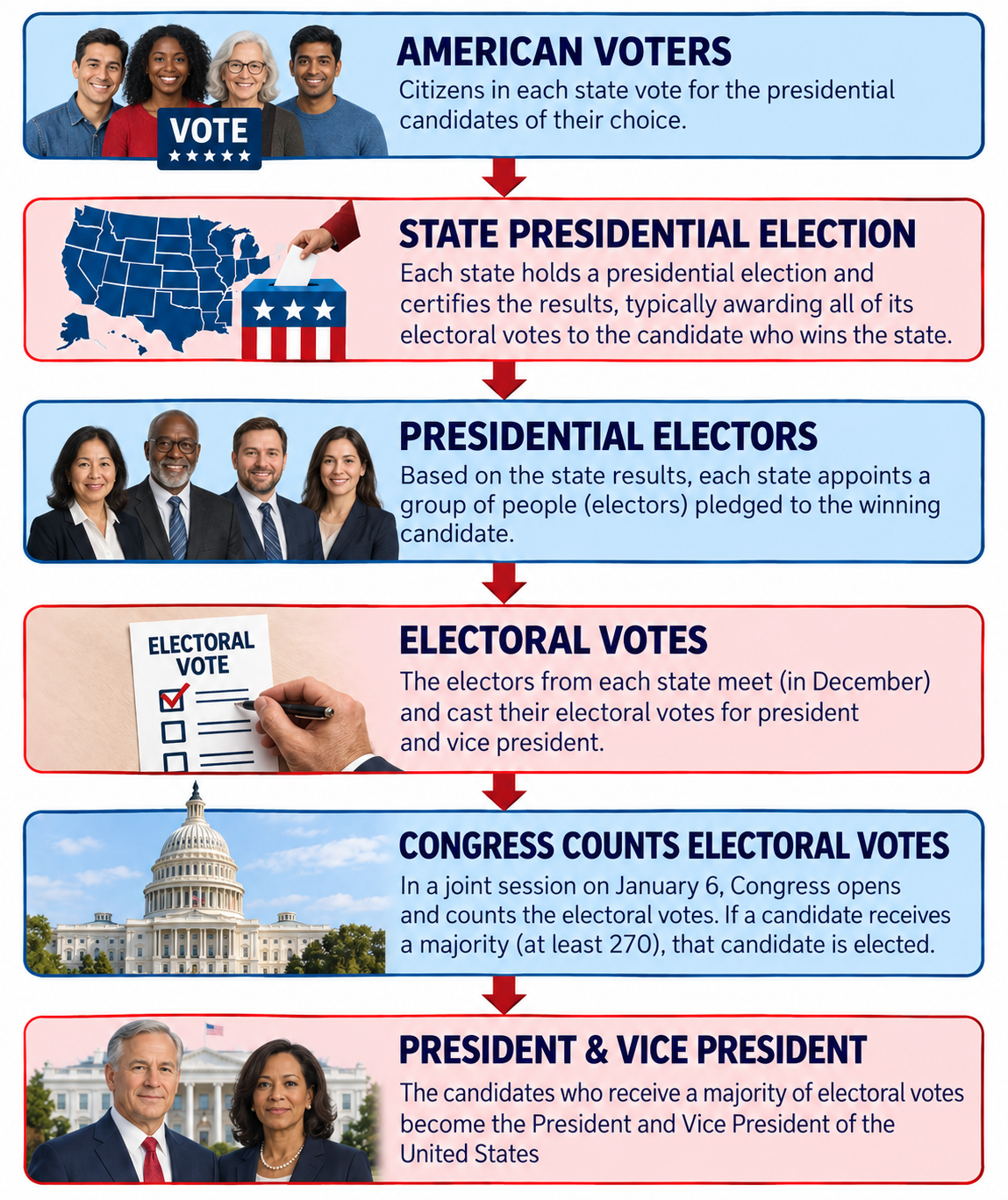
Diagram showing citizens participating in presidential elections through state elections, presidential electors, electoral votes, and the congressional count.
Presidential participation: from citizens' ballots through the Electoral College and congressional count.

Executive Branch

Presidential Participation

Eligible citizens participate by voting in state presidential elections. States appoint electors under their laws, electors cast electoral votes, and Congress counts those votes in joint session. Citizens also remain engaged by evaluating executive actions, contacting public officials, petitioning government, and participating in lawful public debate.

Official references

Legislative Branch

Congressional Participation

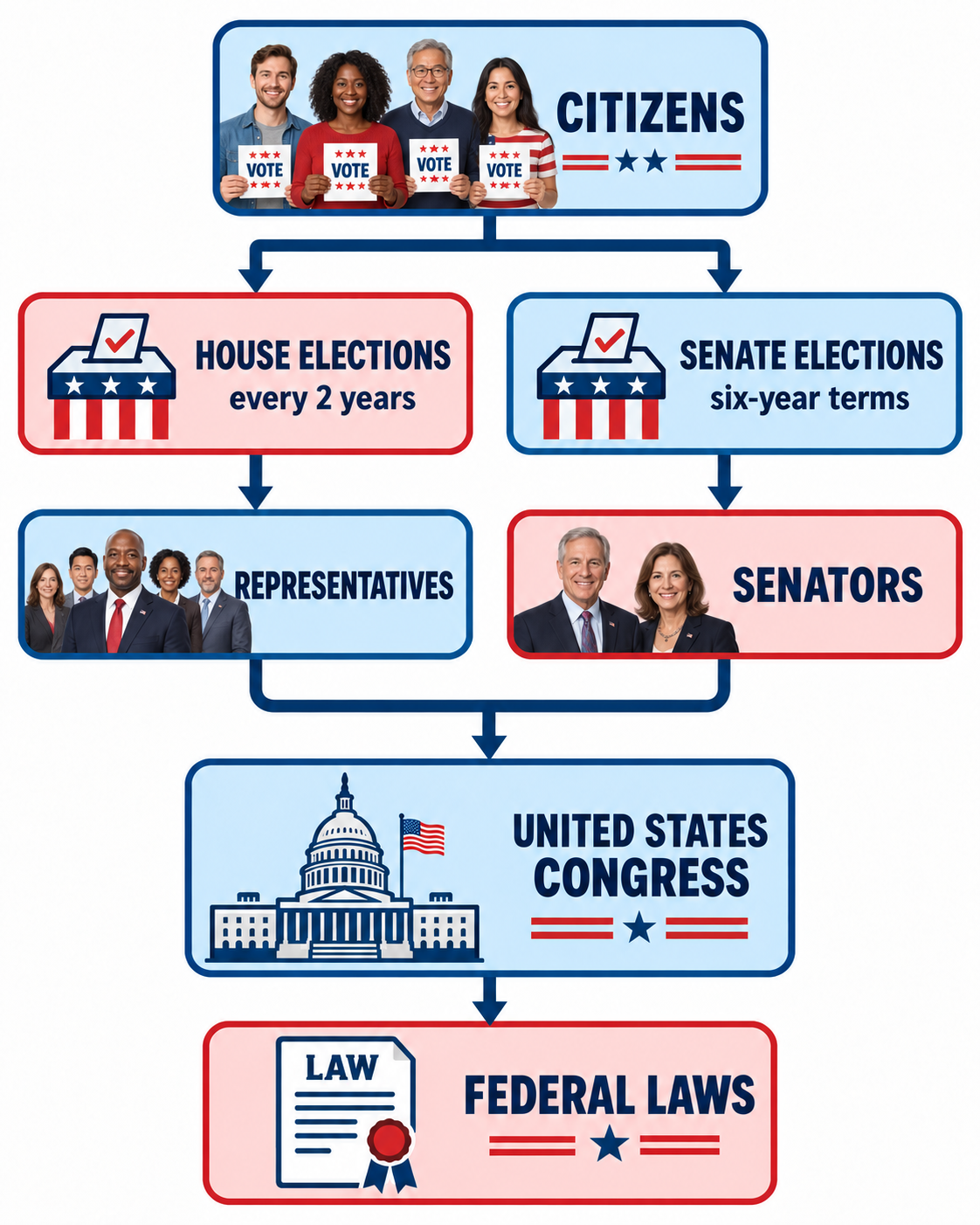
Citizens elect every member of the House of Representatives and the elected members of the Senate. Participation continues between elections through petitions, testimony, public comment, communication with representatives, review of legislation, and peaceful advocacy for or against proposed laws.

Official references

Diagram showing citizens electing members of the House and Senate, forming the United States Congress, which enacts federal laws.
Congressional participation: citizens elect the House and Senate, communicate priorities, and hold lawmakers accountable.
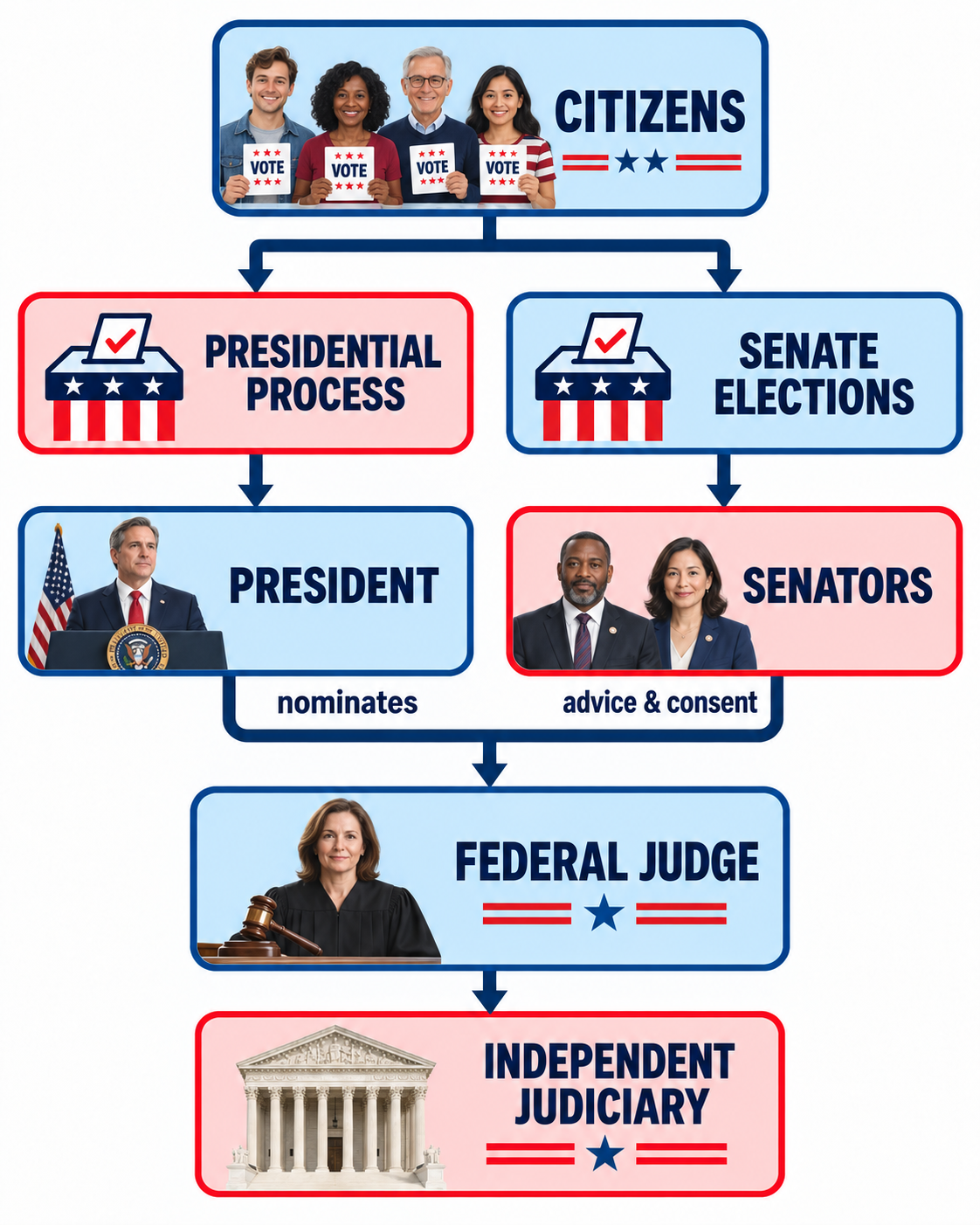
Diagram showing the relationship of citizens, presidential elections, Senate elections, presidential nomination, Senate advice and consent, federal judges, and an independent judiciary.
Judicial participation: nomination and confirmation occur through elected branches while courts remain institutionally independent.

Judicial Branch

Judicial Participation

Citizens do not elect Article III federal judges. Their influence is indirect through presidential and senatorial elections, public scrutiny of nominations, lawful communication with senators, jury service, access to public proceedings, and use of courts to resolve legal disputes. Judicial independence remains essential: courts decide cases under law, not according to election pressure.

Official references